



At a Glance
- Semi-formal requires a jacket. Everything else is flexible.
- A two-piece suit in navy, charcoal, or mid-gray covers 90% of semi-formal events.
- Linen at 8-10oz is the right call for summer and outdoor events. Wool at 120s for evening and winter.
- A tie is optional, not required.
- Dark jeans do not meet the standard, even well-fitted ones.
In This Guide
You got an invite. It says semi-formal. You open your wardrobe, stare at it for ten minutes, and either put on the safest thing you own or Google it and get three different answers that mostly contradict each other.
That is the semi-formal problem. Not the dress code itself. The fact that the name gives you almost no information about what to actually wear.
Here is what semi-formal actually requires: a jacket. That is the one non-negotiable. Beyond that, the dress code gives you more flexibility than most people writing about it will tell you.
This guide covers the definition, a direct comparison against every dress code above and below it, how to build the outfit from scratch, and what to wear to each type of event that uses it. By the end, you will not need to Google it again.
What Semi-Formal Actually Means
Semi-formal sits between smart casual and black tie on the formality scale. For men, that means a suit or a structured blazer with dress trousers, a dress shirt, and leather shoes. A tie is optional at most events and expected at some.
The code shows up on invitations for weddings, corporate dinners, charity events, evening receptions, and holiday parties. It is the most common formal dress code you will encounter outside of black tie, and the one most likely to arrive with no further context.
Where most men go wrong is in one of two directions. Either they assume semi-formal means they can push a smart casual outfit slightly upward, so they wear a blazer with dark jeans and spend the evening slightly off. Or they overcorrect and show up in a three-piece suit to an outdoor garden party and feel overdressed before they have even walked in.
Neither is a plan. A navy suit, a white dress shirt, and leather Oxfords is. That combination works across almost every semi-formal occasion without requiring any additional thought.
Semi-Formal vs. Other Dress Codes: A Direct Comparison
If the confusion is about where semi-formal sits relative to other codes, this table ends it.
| Dress Code | Jacket Required | Trousers | Shirt | Shoes | Tie |
|---|---|---|---|---|---|
| Semi-formal | Yes | Dress trousers or pressed chinos | Dress shirt or smart polo | Oxford or leather loafer | Optional |
| Cocktail | Yes | Dress trousers | Dress shirt | Oxford | Optional but expected |
| Black tie | Tuxedo | Formal trousers with satin stripe | White dress shirt | Patent leather Oxford | Black bow tie |
| Smart casual | Blazer or jacket | Chinos or dark jeans | Dress shirt, polo, or knit | Loafer or Derby | No |
Semi-formal vs. cocktail: Cocktail skews evening and slightly more formal. A dark navy or charcoal suit with a tie is the expected read. Semi-formal covers more occasions, including daytime, and lets you go without the tie. If the invite says cocktail, add the tie and go darker on the suit. If it says semi-formal, you have more range.
Semi-formal vs. smart casual: The jacket is what separates them. A casual blazer with dark jeans that clears the smart casual bar does not clear semi-formal. Semi-formal needs a structured jacket, dress trousers or pressed chinos, and leather shoes. Not close. Exactly right.
Semi-formal vs. black tie: Completely different category. A tuxedo is black tie dress. A suit is semi-formal dress. If the invitation says black tie, a suit is not enough. If it says semi-formal, a well-fitted suit is exactly enough.
How to Build a Semi-Formal Outfit
This is the part where most guides give you a list of options. Here is one combination that works, built from the ground up.
The Jacket
Unit price
per

Unit price
per

Unit price
per

Unit price
per

Unit price
per
$184

Unit price
per

Unit price
per

Unit price
per

Unit price
per

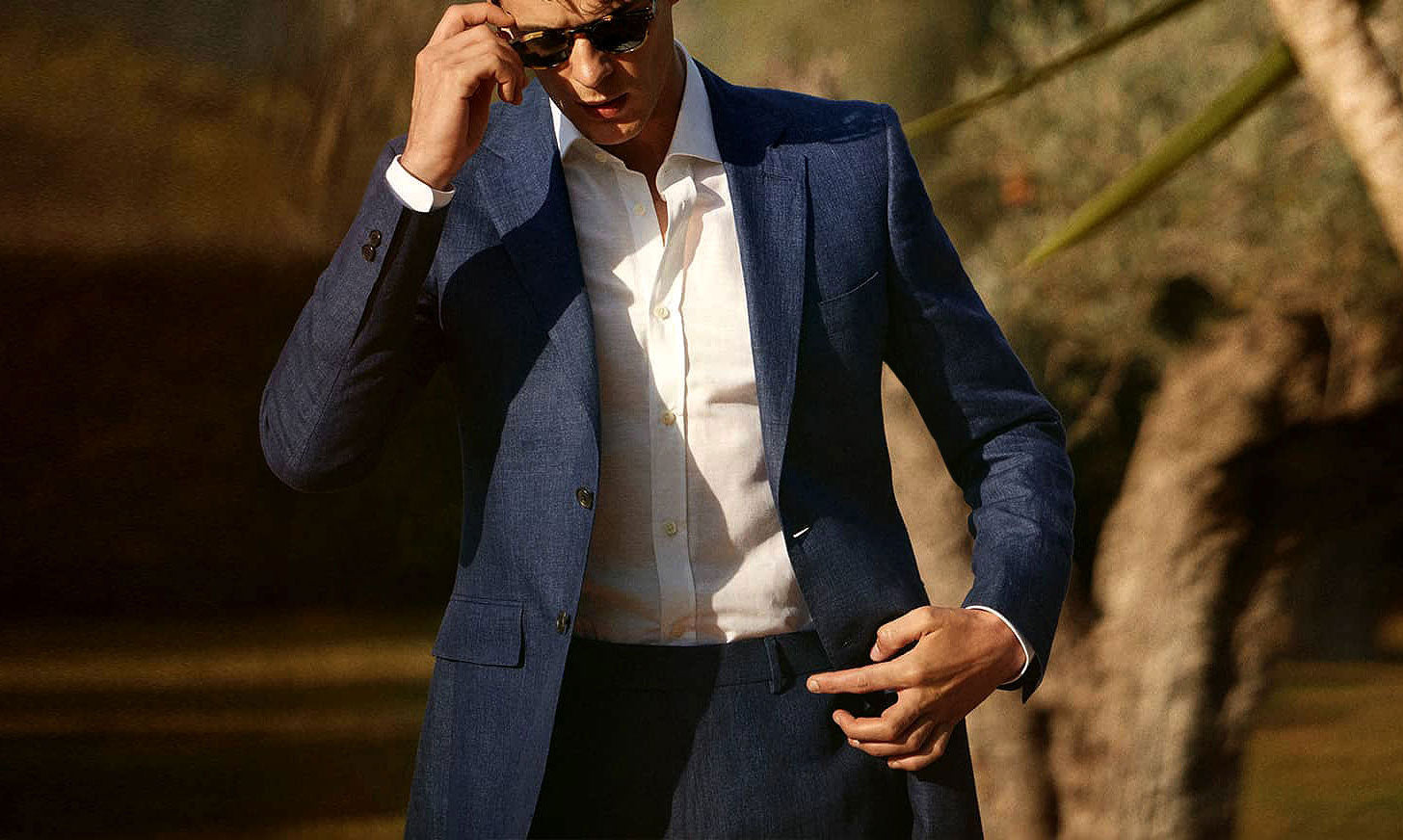
A two-piece suit in navy, charcoal, or mid-gray. That is the call. It works across seasons, occasions, and times of day without requiring any additional decision-making. The navy suit in particular works from a Wednesday in the office to a countryside wedding in October.
If you want to go with a blazer and separate dress trousers instead of a matching suit, the combination needs to coordinate clearly. Navy blazer with charcoal trousers works. Mid-gray blazer with dark navy trousers works. A casual blazer in an unstructured cut with trousers that are slightly mismatched does not. If you are second-guessing whether it works, wear the suit.
Trousers
Dress trousers are the standard. Pressed chinos in a neutral color work for daytime and outdoor semi-formal. Dark jeans do not. Even well-fitted dark jeans with a structured blazer read as smart casual, not semi-formal. The fabric and cut of the trouser do the heavy lifting here. It needs to read as tailored, not casual.
Shirt
White or pale blue dress shirt. The collar sits cleanly inside the jacket. That is the reliable choice for any semi-formal occasion. A smart polo in a clean, structured fabric is acceptable for relaxed daytime events where the venue naturally lowers the formality ceiling. For evening events, the dress shirt is the call.
Shoes
Oxford shoes in black or dark brown leather. Derby shoes are equally correct. Leather loafers work for daytime events. Suede loafers push toward smart casual. Anything with a rubber sole, canvas, or a boot silhouette is not semi-formal.
Black is the safest choice for evening events. Dark brown gives you more range for daytime and seasonal occasions.
Tie
Optional. You do not need a tie for semi-formal. For evening events and indoor formal receptions, wearing one reads more correctly and signals that you understood the occasion. For daytime and outdoor events, skipping it is not a mistake. If you wear one, match the weight to the fabric: silk tie with a lightweight summer suit, knit tie with heavier wool.
Build this look: See the full range of semi-formal suits at Studio Suits
What to Wear by Event Type
The dress code does not change by event, but the fabric and color should. Here is what that looks like in practice.
A summer outdoor event
An 8-10oz linen suit in mid-gray or navy is the right call. Not a blazer and chinos, even well-pressed ones. A complete suit in the right fabric reads as considered. The blazer-and-chinos combination, however neat, reads as dressed up rather than actually dressed.
Pair it with a white or pale blue dress shirt, skip the tie, and wear leather loafers or Derby shoes. Keep it simple. In summer heat, the linen suit does the work. You do not need to add to it.
Look for 100% linen at 170-190gsm. That weight is light enough to stay comfortable through a long day and holds enough structure to look clean from the ceremony through the reception.
An evening indoor dinner or reception
A 120s worsted wool suit in charcoal or midnight navy. This is the strongest read for evening semi-formal. The fabric holds its structure through a long evening, drapes cleanly under artificial light, and looks correct for the occasion without being overdressed.
White dress shirt. Oxford shoes in black leather. A tie is not required but reads well in this setting. If the event feels close to black tie in tone, the tie is worth adding.
A semi-formal wedding as a guest
Navy, charcoal, or mid-gray suit. Avoid black: in most Western contexts it reads as funeral attire unless the invitation specifically requests it. Avoid white or ivory: that belongs to the couple.
For a daytime or summer wedding, a linen suit in light gray or tan is appropriate and far more comfortable than wool in warm weather. For an evening wedding or one in autumn or winter, go with a 120s wool suit in charcoal or navy.
For more on what works specifically at a semi-formal wedding, see the complete semi-formal wedding attire guide.
A corporate dinner or holiday party
Navy or charcoal suit, dress shirt, leather shoes. Tie depends on company culture and venue. For a formal venue or an event the invitation describes as closer to black tie in tone, add it. For a restaurant dinner, you can skip it.
This is the scenario where a well-cut navy suit in mid-weight wool at 200-250g/m2 genuinely earns its keep. It works from the office on the same day and holds up through a long evening.
Fabric Choices by Season
The right fabric is what separates a suit that looks right for the setting from one that looks slightly off. Getting the weight and weave correct matters more at semi-formal events than at casual occasions because the read is higher stakes.
Summer and warm weather: 8-10oz linen at 170-190gsm is the right fabric for outdoor and warm-weather semi-formal. It breathes well, holds a clean silhouette in the right weight, and reads as intentional. Fresco wool at 250-280g/m2 is the alternative if you prefer the structure of wool: the open weave gives it breathability that a standard worsted does not have. Linen-wool blends at 200-240g/m2 hold shape slightly better than 100% linen across a long day and give you both.
Autumn and winter: 120s worsted wool at 280-320g/m2 is the standard. It holds structure through a long evening, drapes well under artificial light, and is the correct weight for indoor formal events. Flannel at 280-340g/m2 works for cold-weather occasions: it has enough weight to look considered and drapes cleanly. Both are the right call when the event is indoors and the temperature drops.
Year-round: Mid-weight wool at 200-250g/m2 covers most semi-formal occasions across the calendar. It is not as breathable as linen in peak summer heat, and not as substantial as flannel in winter, but it is the closest thing to a default fabric for the code. A navy suit in this weight genuinely holds up from spring through autumn without adjustment.
What to avoid: Polyester blends. Fabrics labelled "suit fabric" with no composition listed. Anything that pills, loses shape, or looks tired after a single event. Semi-formal events are high-visibility by definition.
Semi-Formal Attire for Men: Frequently Asked Questions
What is semi-formal attire for men?
Semi-formal means a jacket is required. For men, that means a suit or a blazer with dress trousers, a dress shirt, and leather shoes. A tie is optional. The code sits above smart casual and below black tie, and it shows up most often on invitations for weddings, corporate dinners, charity events, and evening receptions.
What is a semi-formal look for a man?
The standard semi-formal look is a two-piece suit in navy, charcoal, or mid-gray, a white or pale blue dress shirt, and Oxford shoes in black or dark brown leather. A tie is optional. For summer events, a linen suit at 8-10oz in light gray or tan is appropriate and more comfortable than wool in warm weather. For evening events, lean toward darker shades and structured wool.
What are the rules for semi-formal dress code?
Three rules cover most situations. A jacket is required: suit jacket or structured blazer, not a casual layer. No jeans: dress trousers or pressed chinos only. Leather dress shoes: Oxfords, Derbys, or leather loafers. Beyond those three, semi-formal gives you flexibility on color, fabric, and whether to wear a tie.
Can you wear jeans to a semi-formal event?
No. Even dark, well-fitted jeans with a structured blazer read as smart casual, not semi-formal. The trouser needs to be dress trousers or chinos in a clean, pressed fabric. Leave the jeans out.
Is semi-formal the same as cocktail attire?
Close, but not the same. Cocktail attire is slightly more formal and almost always evening-specific. A dark suit in navy or charcoal with a tie is the expected read for cocktail. Semi-formal covers more occasions, including daytime, and gives you more flexibility on color and tie. If the invite says cocktail, go darker and add the tie. If it says semi-formal, you have more room.
Do you need a tie for semi-formal?
No. A tie is optional for semi-formal. For evening events and indoor formal receptions, wearing one reads more correctly. For daytime and outdoor events, skipping it is not a mistake. If you do wear one, match the weight to the fabric: silk tie with a lightweight summer suit, knit tie with heavier wool or flannel.
Can you wear black to a semi-formal event?
A black suit works for semi-formal but is not the first choice. In most Western contexts, black suits read as funeral or very formal evening wear. For evening receptions that feel close to black tie in tone, a black suit works. For daytime events and weddings, stick to navy, charcoal, or mid-gray.
Are chinos semi-formal?
Pressed chinos in a neutral color can meet semi-formal standards for daytime and outdoor events. For evening semi-formal, dress trousers are the right call. The chinos need to be clean, pressed, and in a fabric that reads as tailored. Casual-fit chinos with visible texture or wear do not make the cut.
What shoes are appropriate for semi-formal?
Oxford shoes in black or dark brown leather are the default. Derby shoes are equally correct. Leather loafers are acceptable for daytime events. Suede loafers push toward smart casual. Boots, canvas shoes, and anything with a rubber sole are not appropriate.
Is a tuxedo too formal for semi-formal?
Yes. A tuxedo is black tie dress, one level above semi-formal. Wearing one to a semi-formal event means you are overdressed. A well-fitted suit in navy or charcoal is exactly right.
You might also find useful