



At a Glance
- White tie is the most formal dress code in Western clothing. Black tie is one level below and far more common.
- Black tie means a dinner jacket (tuxedo), not a dark suit. A suit is appropriate only at "black tie optional" events.
- White tie requires a black tailcoat and white waistcoat. A dinner jacket is not correct for white tie.
- Most men will encounter black tie at some point. Very few will ever need white tie: it appears at state dinners, royal events, and the Nobel Prize ceremony.
- Black patent leather Oxfords are the correct shoe for both black tie and white tie.
In This Guide
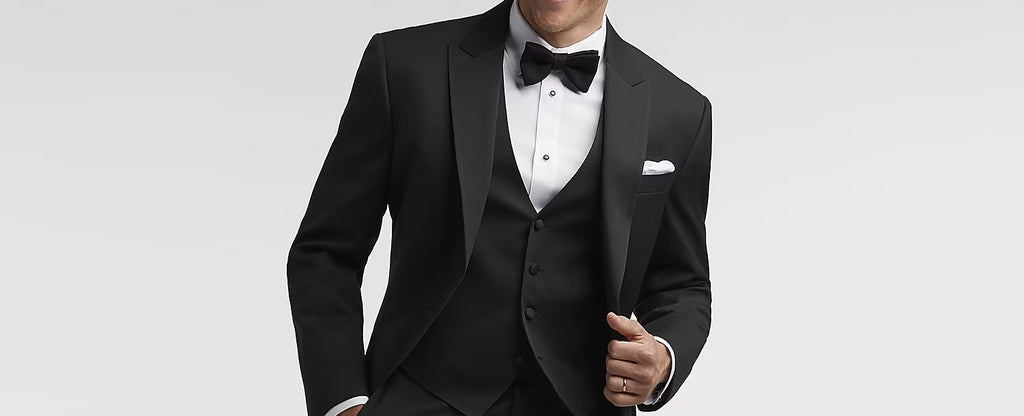
Black tie and white tie are both formal dress codes, but they are not interchangeable. White tie is the most formal dress code in Western clothing. Black tie is one step below and far more common: it appears on invitations for galas, charity dinners, awards ceremonies, and formal evening events. Most men will encounter black tie at some point in their lives. Very few will ever need white tie.
The confusion between the two codes comes from two directions. Some men treat black tie as interchangeable with "wear a dark suit." It is not: a dinner jacket is required. Others see "white tie" on an invitation and assume it is similar to black tie with a different tie color. It is not: white tie is an entirely different category of dress, with different garments and requirements at every element.
This guide gives you the requirements for each code, a direct comparison, and the answer to the most common question buyers have: whether a suit is ever appropriate at a black tie event.
Black Tie vs. White Tie: The Core Difference

| Requirement | Black Tie | White Tie |
|---|---|---|
| Jacket | Black or midnight blue dinner jacket (tuxedo) | Black tailcoat |
| Trousers | Black trousers with a single satin stripe | Black trousers with two satin stripes |
| Shirt | White dress shirt, stiff or soft front | White dress shirt, stiff pique front |
| Tie | Black bow tie | White bow tie |
| Waistcoat | Optional (black or midnight blue) | White pique waistcoat (required) |
| Shoes | Black patent leather Oxfords | Black patent leather Oxfords |
| Cufflinks | Discreet, white or black | Silver or white, formal |
| Pocket square | Optional | White pique (required) |
Is white tie more formal than black tie?
Yes. White tie is the most formal dress code in Western clothing. It requires a black tailcoat (not a dinner jacket), a white pique waistcoat, and a white bow tie. This combination appears at state dinners, royal events, Nobel Prize ceremonies, and a small number of formal academic occasions. Black tie is one step below: a dinner jacket with a black bow tie. Most formal evening events in the US and UK use black tie, not white tie.
What is the difference between black tie and black tie optional?
Black tie means a dinner jacket is expected for men. Black tie optional means a dark suit is acceptable if you do not own or prefer not to wear a tuxedo. If attending a black tie optional event in a suit, choose charcoal or midnight navy, not lighter shades. A tie (not a bow tie) is standard with the suit. When in doubt, a tuxedo is always correct at a black tie optional event: you will not be overdressed.
What to Wear to a Black Tie Event

Black tie has specific requirements at every element of the outfit. Here is what each requires.
Jacket: A black or midnight blue dinner jacket (tuxedo jacket). Midnight blue reads as richer than black under artificial light, which is why many formal dressing guides prefer it. The jacket has satin or grosgrain peak or shawl lapels, which distinguish it visually from a standard suit jacket.
Trousers: Black formal trousers with a single satin stripe running down the outer seam of each leg. These are not standard suit trousers: the satin stripe is a formal detail that belongs specifically to black tie and white tie dress. Do not substitute regular wool suit trousers.
Shirt: White dress shirt in a stiff or soft front. Pleated front or plain front; either is appropriate. No colored shirts, no patterned shirts. The shirt should have French cuffs for cufflinks.
Tie: A black bow tie. Self-tie is preferred over pre-tied; it looks more natural and less mechanical. A black long tie is sometimes acceptable at relaxed black tie events, but a bow tie is always correct.
Shoes: Black patent leather Oxford shoes. The patent finish is a formal detail specific to black tie and white tie dress. Regular leather Oxfords (matte leather, not patent) are technically acceptable but read as less correct than patent. No suede, no brown, no Derby shoes.
Waistcoat: Optional. A black or midnight blue waistcoat adds a layer of formality. A white waistcoat is incorrect for black tie (it belongs to white tie).
What to avoid at a black tie event:
- A dark suit instead of a dinner jacket (correct only at "black tie optional")
- Brown shoes or suede footwear
- Colored or patterned shirts
- Novelty bow ties or novelty cufflinks
- A standard long tie instead of a bow tie (at formal events)
Build this look: Browse formal suits at Studio Suits
What to Wear to a White Tie Event

White tie is rare. The occasions that require it are limited: state dinners hosted by heads of government, royal events, the Nobel Prize ceremony, select Oxford and Cambridge balls, and a small number of institutions that maintain formal dress traditions. If your invitation says white tie, it will almost certainly be one of these.
What white tie actually requires:
Jacket: A black tailcoat. This is a different garment from a dinner jacket: it has a short front and long tails at the back. It is not a tuxedo and cannot be substituted with one.
Trousers: Black formal trousers with two satin stripes on the outer seam (black tie uses one). High-waisted, worn with braces rather than a belt.
Shirt: White dress shirt with a stiff, starched pique front. This is more formal than the soft-front shirt used for black tie.
Tie: White bow tie. This is the defining detail of white tie and gives the dress code its name.
Waistcoat: White pique waistcoat, required. Not optional as it is in black tie.
Shoes: Black patent leather Oxfords. The same as black tie.
Practical note: Most men who need white tie hire the outfit rather than purchasing it. The occasions requiring white tie are rare enough that owning the full kit is not practical for most people. Formal hire services carry complete white tie kits.
Can You Wear a Suit to a Black Tie Event?
At a strictly black tie event, a suit is not appropriate. A dinner jacket is the required garment. If you arrive at a black tie event in a dark suit, you will be underdressed relative to the dress code.

The practical reality is that "black tie" as a label on an invitation covers a range of adherence. Some events labeled black tie have mixed dress; others enforce it strictly at the door. When in doubt, wear the dinner jacket. You will never be overdressed at a black tie event in a tuxedo. You may be noticeably underdressed in a suit.
The exception is "black tie optional" or "black tie preferred," where a dark suit is explicitly acceptable. If the invitation says either of those phrases, a charcoal or midnight navy suit is appropriate. See also: black tie optional: what to wear.
For events below black tie in formality, including semi-formal, cocktail, and smart casual, a suit is the correct choice. A detailed breakdown of where semi-formal sits relative to other dress codes is in semi-formal attire for men: what it actually means.
Formal Dress Code FAQ
Is black tie the same as a tuxedo?
Black tie is a dress code; a tuxedo is the garment that fulfils it. Wearing a tuxedo (dinner jacket, matching formal trousers, white dress shirt, black bow tie) meets the black tie dress code requirement for men. "Tuxedo" is the American English term; "dinner jacket" is the British equivalent for the same garment.
What does black tie mean on an invitation?
A black tie invitation means men are expected to wear a dinner jacket (tuxedo), black formal trousers, a white dress shirt, and a black bow tie. A dark suit is not appropriate at a strictly black tie event. If the invitation says "black tie optional" or "black tie preferred," a dark suit is acceptable.
What is white tie and when is it required?
White tie is the most formal dress code in Western clothing. It requires a black tailcoat, white pique waistcoat, white bow tie, and black patent leather Oxfords. It appears on invitations for state dinners, royal events, the Nobel Prize ceremony, and select formal institutional events. Most people will encounter it once or never.
Do you need a waistcoat for black tie?
No. A waistcoat is optional for black tie. If you wear one, it should be black or midnight blue: a white waistcoat belongs to white tie, not black tie. Many men at black tie events skip the waistcoat entirely; others wear a black cummerbund as an alternative that covers the trouser waistband.
What is the difference between a dinner jacket and a tuxedo?
There is no meaningful difference. "Tuxedo" is the American English term for the garment. "Dinner jacket" is the British term. Both refer to the same formal evening jacket: a short, lapeled jacket in black or midnight blue with satin or grosgrain lapels, worn as the centerpiece of black tie dress.
Can women wear black to a black tie event?
This guide covers men's dress codes. For women's black tie dress, the general standard is a floor-length evening gown or a formal cocktail dress. Black is appropriate for women at black tie events in most contexts. Dress code conventions for women at formal events vary more by event and host than they do for men.
Is a wedding black tie or white tie?
Almost always black tie, and only when the invitation specifically says so. A "black tie" wedding means a tuxedo for men. White tie weddings are extremely rare and would be stated explicitly. If a wedding invitation gives no dress code, it is not black tie: a dark suit is the safe choice. If it says "black tie optional," a charcoal or midnight navy suit is acceptable in place of a tuxedo.
Why did black tie replace white tie?
White tie was the standard evening dress code through the 19th century. Black tie emerged in the 1880s as a less formal alternative for private dinners, the dinner jacket was easier to wear than a tailcoat. Through the 20th century, as formality relaxed across society, black tie became the default for galas, weddings, and awards ceremonies, while white tie retreated to state occasions and ceremonial events. Today most men will only ever need black tie.